By AROMAMATRIX Project Team
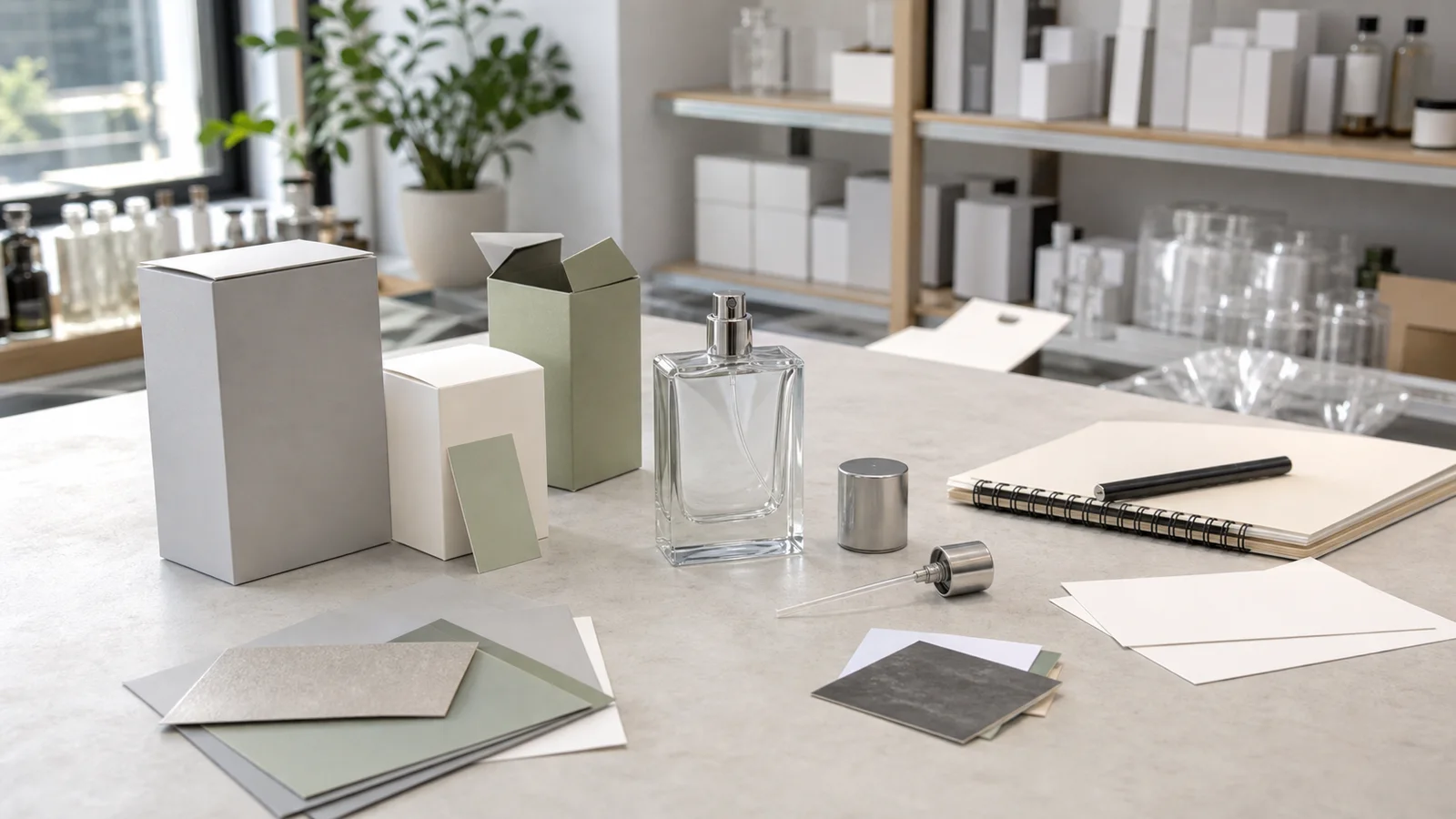
There is no honest single answer to “how much does private label perfume cost?” until the product has been defined. Two 50ml perfumes can differ materially in cost because one uses stock glass and a printed carton while the other requires coated glass, a weighted cap, foil decoration and a custom insert.
Start with fragrance concentration and fill size, then list the bottle, pump, collar, cap, decoration, label, carton, insert and protective export packaging. Add filling, assembly and inspection. This component-level view is more useful than asking for a generic price per bottle because it shows which decision is consuming the budget.
Fragrance concentrate is only one variable. The same scent at a higher dosage normally uses more concentrate, but packaging often creates the larger difference. A stock bottle with one-color printing is a different purchasing project from a custom-molded bottle with gradient coating and a metal cap.
A comparable quotation should distinguish unit costs from setup charges. Artwork plates, color matching, decoration trials, molds and special tooling may be paid once, while bottles, liquid, cartons and filling recur with every order. Also ask whether spare printed components must be purchased when a packaging supplier's production minimum exceeds the perfume filling quantity.
Samples, laboratory work, freight, insurance, duties and destination handling should not quietly disappear from the budget. A low factory unit price can produce a higher landed cost if the quotation excludes items another supplier has included.
Give each manufacturer the same bottle size, concentration, quantity, packaging specification and delivery term. Check whether the quotation includes component assembly, cellophane, batch coding, export cartons and inspection. If one proposal is EXW and another includes delivery to a port, the headline unit prices are not directly comparable.
AROMAMATRIX typically reviews private-label projects from 2000 pieces when suitable standard components are available, and customized fragrance projects from 3,000 pieces. These are planning quantities, not universal promises: decoration and packaging suppliers may impose higher minimums. Projects below 2000 pieces can be assessed through WhatsApp, usually with narrower component choices and a higher unit cost.
A useful RFQ states the target market, format, quantity and required finish. That gives the factory enough information to explain the cost drivers instead of returning a price that changes after sampling.