By AROMAMATRIX Project Team
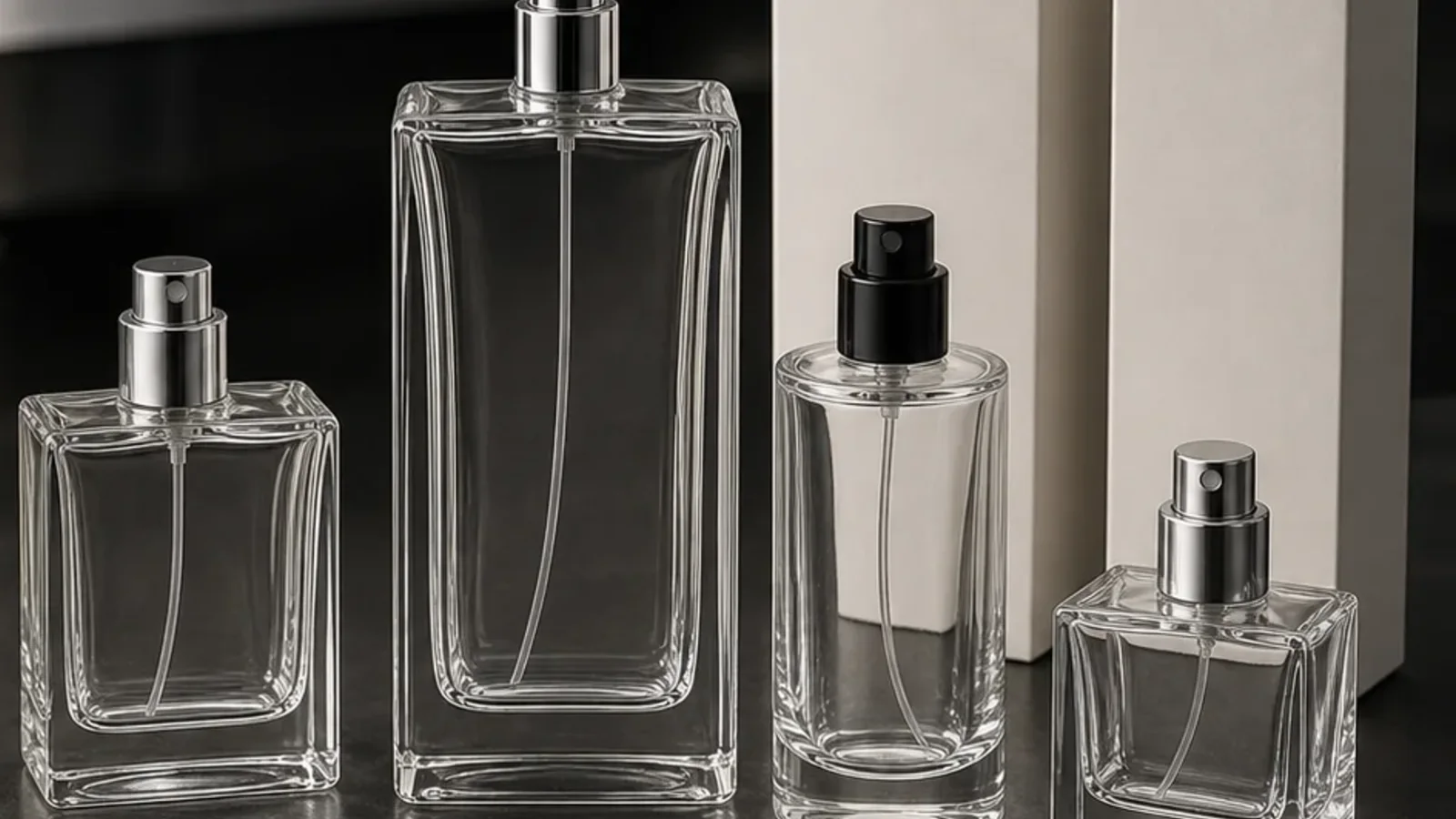
The best perfume packaging ideas are not the ones with the most finishes. They are concepts that express the brand, protect the product and can be repeated within the launch quantity and budget.
Choose what customers should notice first: the bottle silhouette, glass color, cap, label, print or carton structure. When every component tries to become the signature element, cost and approval complexity rise quickly. A stock bottle with one distinctive coating and a well-proportioned cap can look more coherent than a package using five unrelated decoration processes.
Stock glass does not have to look generic. Color coating, frosting, screen printing, hot stamping, labels, collars and caps can create a recognizable system without funding a new glass mold. The practical advantage is not only lower tooling cost: existing components are usually easier to sample, test and replace.
Before selecting a finish, ask about color tolerance, print area, adhesion, scratch resistance, MOQ and the effect on lead time. Metallic surfaces, deep gradients and edge-to-edge decoration may need more trials than a rendering suggests.
Artwork should start after bottle, cap and insert dimensions are confirmed. The insert must control movement without damaging the coating. Leave room for mandatory label information, batch coding and readable barcodes. For e-commerce, consider vibration and drop exposure rather than designing only for a retail shelf.
For a first perfume launch, restraint is useful. Put the budget into a reliable pump, clean decoration and a protective carton. More complex molds, gift boxes and accessories can be introduced after sales data justifies the additional component minimums.